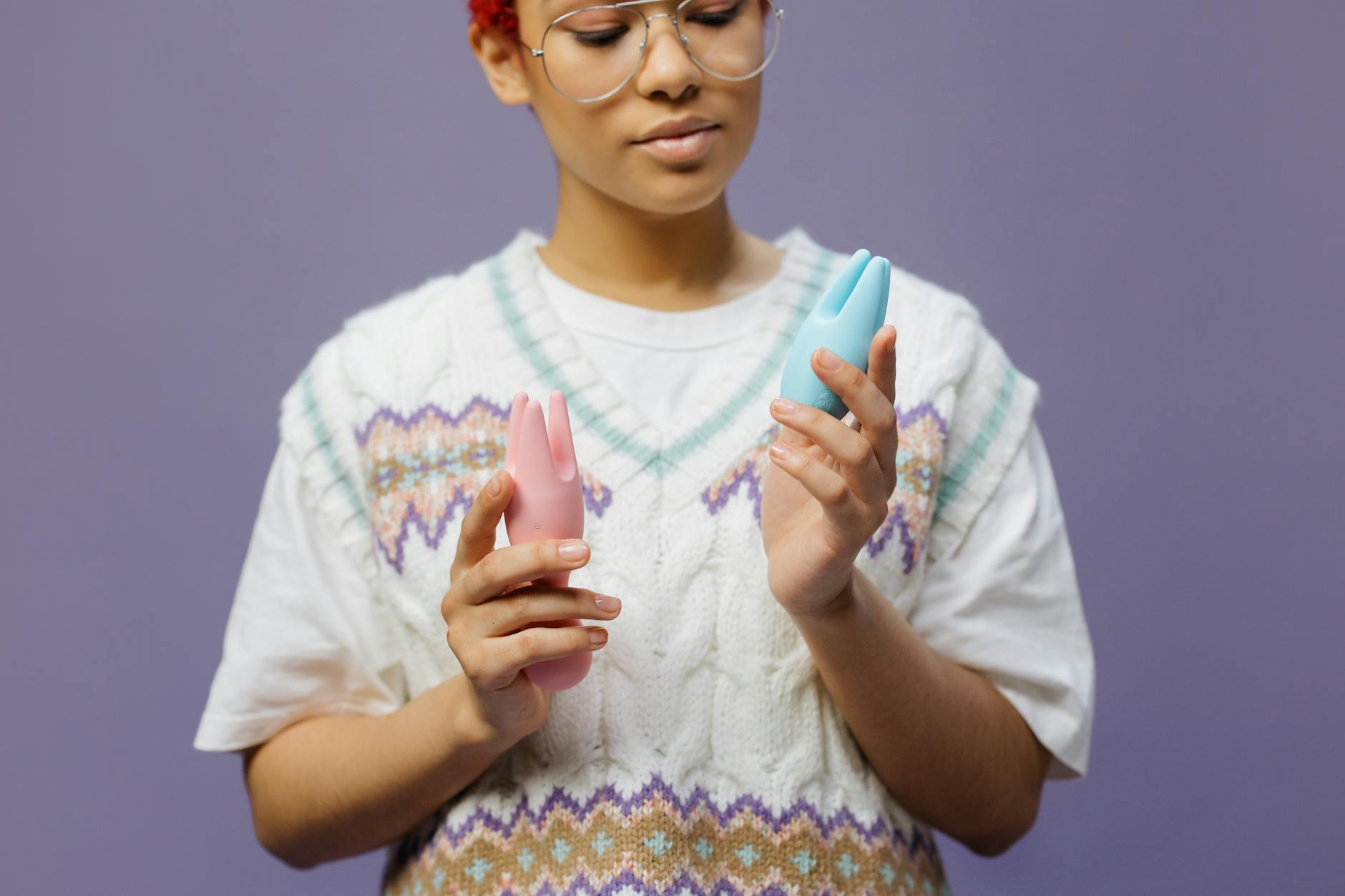
Here's what reduced sensitivity actually feels like
You're stimulating yourself. You're present. You want this. And yet. The sensation feels distant, muffled, like you're experiencing pleasure through a layer of cotton. It's not pain. It's not numbness exactly. It's more like your body forgot how to ring the bell.
Reduced sensitivity is one of the most frustrating experiences in pleasure because it looks like a motivation problem (it's not) and feels like a body problem (it partially is, but not the way you think). The good news: lemon vibrators, especially the clitoral suction design, are built specifically to cut through this friction.
Why reduced sensitivity happens
Several things cause the nerve pathways to quiet down. Antidepressants and other medications can dull sensation overall. Stress and anxiety physically tighten the pelvic floor and reduce blood flow to the genitals. Hormonal shifts after birth control changes or aging affect tissue responsiveness. Repetitive stimulation from the same toy or technique can create a desensitization effect.
Here's the part most people get wrong: reduced sensitivity is not the same as low libido. You might want sex. You might be attracted to your partner or excited about solo time. Your nervous system just isn't firing the way it usually does. That distinction matters because the fix isn't psychological. It's mechanical and neurological.
Why lemon vibrators work when other toys don't
Traditional vibrators work through vibration alone. That vibration travels through the tissue, and if your nerve endings aren't responsive, the signal gets lost. The Lem and similar lemon clitoral vibrators use air-pulse suction technology instead. This works differently.
Suction creates a pressure gradient. It pulls the tissue into a gentle seal and alternates that pressure. This doesn't rely on the same nerve pathways as vibration. It targets deeper nerves in the clitoral structure and creates a unique sensation that bypasses the numbness entirely. For people with reduced sensitivity, this is the difference between a faint buzz and an unmissable surge.
The pattern matters too. Lemon vibrators allow you to start at the lowest intensity setting and layer patterns. This lets you build gradually without overwhelming a nervous system that's already struggling to register sensation. You're not forcing pleasure. You're coaxing it back.
The step-by-step approach that works
Start with zero expectation. The first session with a new toy, when you have reduced sensitivity, is reconnaissance, not performance. You're mapping what works, not chasing an outcome. Give yourself permission to feel absolutely nothing. This removes the pressure that amplifies numbness.
Use pattern 1 or 2. The lowest settings on lemon clitoral vibrators are gentle. Too many people think they need intensity when they have reduced sensitivity. Wrong. Intensity can actually push you deeper into numbness by overwhelming an already-struggling nervous system. Start soft. Let your body wake up before you ask it to run.
Add lubricant. Water-based lube isn't optional here. Friction increases sensitivity slightly, but lube increases the glide and reduces the work your nervous system has to do to register sensation. Your body can focus on feeling instead of processing pressure.
Take your time. Reduced sensitivity means arousal builds slower. Budget 20-30 minutes instead of 10. This isn't extra time wasted. This is time your nervous system uses to reconnect. Many people find that the longer warm-up period is what actually shifts the needle.
Breathe differently. Shallow breathing tightens the pelvic floor. Deep belly breathing relaxes it. When you can feel your body opening, blood flow improves and sensation improves with it. This is not meditation spirituality. This is basic physiology. Breathe into your belly. Notice what changes.
When to layer in more intensity
After two or three sessions at lower settings, you'll notice a shift. Sensation returns in waves. That's your nervous system waking up. Only then move to pattern 3 or 4. Only then experiment with different angles or positions. Build on what's working.
Many people find that mixing intensity levels within a session works better than gradually increasing overall. Start at pattern 1, build to 2, move to 3, then drop back to 2. This rhythm mimics how natural arousal works and feels less jarring to a sensitive nervous system.
The mental piece (it's not just physical)
Reduced sensitivity often shows up alongside performance anxiety. You're worried you won't feel anything, which makes you tense, which makes you feel less. The cycle deepens. Breaking it requires acknowledging that your body isn't broken. It's just recalibrating.
If you're working with a partner, separate the conversation. "I need a slower warm-up to feel sensation again" is a fact about your nervous system. It's not about them or your attraction. Many couples find that when they stop making sensitivity a shared goal and start treating it as individual body information, the pressure dissolves and sensation returns faster.
Red flags to watch
If reduced sensitivity shows up suddenly alongside pain, discharge, or other physical changes, see a doctor. That's not a toy problem. That's information your body is sending you.
If you've been using the same toy at high intensity every day for months, take a break. A week or two without stimulation can reset your nervous system's baseline. Then restart with lemon clitoral vibrators at lower intensities. Many people find this pause-and-reset cycle more effective than anything else.
If reduced sensitivity doesn't improve after consistent, patient exploration over 4-6 weeks, talk to a healthcare provider. Medication adjustments, hormone levels, or pelvic floor therapy might be the actual fix.
FAQ
Can reduced sensitivity go away completely?
Yes. Most people see significant improvement within 2-4 weeks of patient exploration with the right tool. That said, sensitivity isn't a fixed trait. It fluctuates based on stress, hormones, sleep, and overall health. The goal isn't permanent perfect sensation. It's reconnecting with your body's capacity for pleasure and understanding what helps it respond.
Will my sensitivity ever get worse if I use lemon vibrators regularly?
Not if you vary your approach. Stick to one pattern and one intensity every time, and you might notice adaptation over months. Mix it up. Use different patterns. Take occasional breaks. Treat your pleasure like your workouts. Variety prevents stagnation.
Is reduced sensitivity the same as anorgasmia?
Not quite. Reduced sensitivity is numb or muted sensation. Anorgasmia is the inability to orgasm despite arousal. Reduced sensitivity is often what precedes anorgasmia, which is why addressing it early matters. The good news is that the approaches overlap significantly. How to Use Lemon Vibrators When You Feel Numb or Disconnected From Pleasure digs deeper into that territory.
Do I need to use lemon sexual toys forever if I have reduced sensitivity?
Not necessarily. Once your nervous system recalibrates and sensation returns, you might find other toys work fine. Some people stick with lemon clitoral vibrators because they like how they feel. Others branch out. The toy was the bridge. What matters is that your body learned it could feel again.
What if I'm also dealing with medication side effects?
Lower intensity, longer warm-ups, and patience help more than anything. You're not fighting the medication. You're working around it. If your medication is causing severe sexual dysfunction, talk to your prescriber about dosage or timing adjustments. Sometimes taking your medication at night instead of morning helps. Sometimes a different drug in the same class works better. Healthcare providers have options. You just have to ask.
Can a partner help with reduced sensitivity?
Yes, but carefully. The most helpful thing a partner can do is slow down. Longer foreplay. Lower pressure. More focus on sensation than outcome. Many partners interpret reduced sensitivity as lack of interest. Reframing it as "my body needs more time to wake up" changes everything. They're not working harder. They're working differently. How to Use Lemon Vibrators When Partner Wants Foreplay But You Need Direct Stimulation explores this dynamic more fully.
The bottom line
Reduced sensitivity feels like a wall. It's not. It's a signal that your nervous system needs a different approach. Lemon vibrators, with their gentle suction technology and low-intensity options, speak that language. They don't force sensation back. They invite it.
Start soft. Be patient. Breathe. Give your body permission to take time. Most people find that within weeks, sensation returns stronger than before because they've learned how their body actually works instead of just assuming it.
Your pleasure matters. Your body's capacity to feel again is worth the investment of time and the right tool. That's not negotiable.
Ready to explore? Contact Try Lemon Sex Toys if you have questions about which lemon vibrator might be best for your sensitivity level.