Let's be real about what happens
You had kids. Sex stopped. Not because you don't love your partner. Not because the attraction vanished. But because someone is always touching you, needing you, asking you for something, and the last thing your body wants at the end of the day is more physical contact, even the good kind.
That's the real story. And most couples don't talk about it honestly because the shame pile is already so high.
Why parenthood nukes desire so fast
This isn't weakness or boredom. It's biology stacked on top of logistics.
When you spend eight hours being climbed on, grabbed, wiped, hugged, and asked for snacks, your nervous system is in activation mode. Then bedtime happens, and suddenly your partner wants touch that isn't functional. Your brain goes: "No. Not another body. I need space."
That's called touch saturation, and it's completely normal. Add in sleep deprivation, the mental load of scheduling and remembering everything, and the fact that sex requires you to shift from Mom mode to your own body. That's a massive gear change when you're running on fumes.
Partners often interpret this as rejection. It's not. It's depletion.
Why solo pleasure changes the equation
Here's what I see in my practice repeatedly: couples who restart intimacy don't do it through scheduled sex or forced date nights. They do it through reclaiming solo pleasure first.
When you use a lemon vibrator alone, you're doing three things at once:
- You're remembering that pleasure exists outside of your role as a parent.
- You're regulating your nervous system on your own terms, not someone else's timeline.
- You're building the actual desire that sex with a partner requires.
It sounds backwards, but solo time with a clitoral vibrator is often what makes partnered sex feel appealing again. You're not touching out. You're in control of the pace, the pressure, and when it stops.
The practical reframe
Instead of thinking "I should want sex," the framework becomes: "I want to feel good on my own."
That's permission. You're not doing this for your partner's benefit or to fix the relationship. You're doing it for yourself, in five or ten minutes, before everyone wakes up or after they're asleep.
Lemon clitoral vibrators work exceptionally well for this because they're fast. You don't need extended foreplay or a long buildup. The suction and stimulation on patterns one or two can take you from zero to release in five to eight minutes. That matters when your time is fractured and your attention is split.
How to actually make it happen
Timing is everything. You need ten minutes when no one is looking for you.
For most parents, that's: early morning before kids wake up, shower time after everyone's asleep, or the slot between kids going to school and your actual workday starting. Locked bathroom door. That's it.
Start with your lemon vibrator on pattern one or two. Don't jump to intensity. You're not trying to "get there fast" out of obligation. You're reconnecting with sensation and learning what your body actually wants right now, in this season of life.
Many parents tell me that the first few times feel weird or pressured. That's fine. You're undoing a lot of "I should" energy. Let it be awkward. It gets better.
What happens next with your partner
Once you've reclaimed solo pleasure, the conversation with your partner shifts naturally.
Instead of "We need to have more sex," it becomes "I've been touching out, and I realized I need some time for myself first." That's honest. That's a real statement your partner can work with.
Many couples find that when one partner starts solo play again, the other person notices a change. You seem lighter. More present. Less resentful. Suddenly sex isn't a chore or a negotiation. It's possible.
When you do want to bring partnered intimacy back, you already know what your body wants because you've been listening to it. You can tell your partner: "I need direct clitoral stimulation," or "I can only do this if I'm on top," or "I need this to be short." That's the data you get from using a lemon vibrator alone first.

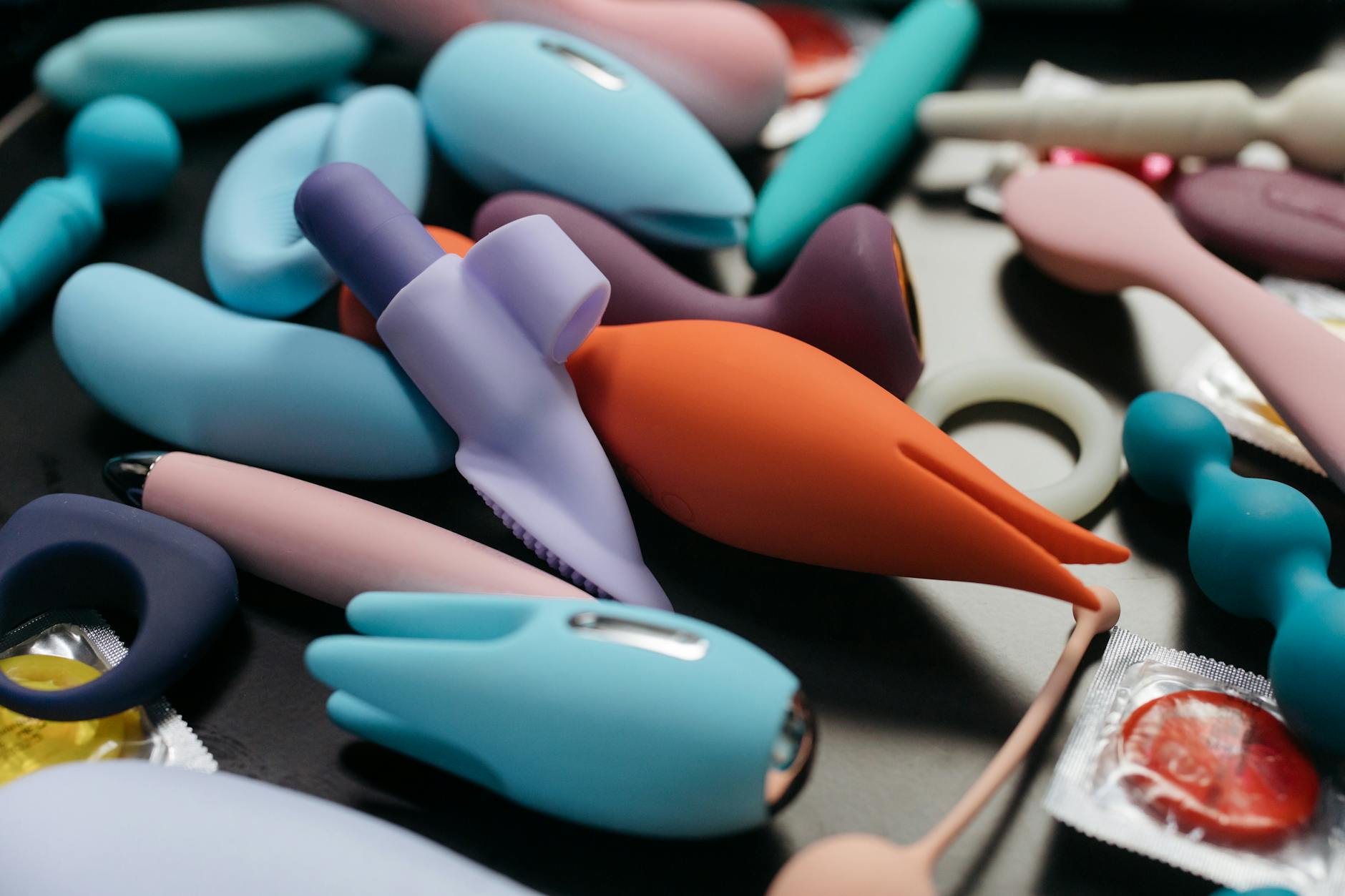
Photo by Anna Shvets on Pexels
The timeline reality
If your kids are under five, you might reclaim solo pleasure before partnered sex. That's fine. If they're older, you might find that solo rhythm comes back faster.
There's no deadline. You're not trying to "fix" your marriage or prove anything. You're slowly building the neural and emotional pathways that make pleasure feel possible again.
Most parents I work with notice a shift within two to three weeks of solo play becoming consistent. Not huge, dramatic change. Just a little space opening up where pleasure felt blocked.
When solo play isn't enough
If you've been using your lemon vibrator regularly for a month and you still feel zero desire for partnered sex, that's information. That might mean:
- You need more sleep (address that before anything else).
- There's resentment in the relationship that needs actual conversation.
- You need more alone time than your current schedule allows.
- Something deeper is happening, and talking to a therapist makes sense.
Solo pleasure is a starting point, not a cure-all. But it's almost always the right starting point because it puts you back in your body without pressure.
One more thing about touch saturation
It's worth telling your partner: "Being touched out doesn't mean I don't love you or want you. It means my system is full, and I need space to reset." That's a statement that can change everything because it stops sex from being a place where your partner takes, and starts being a place where you both show up willing.
Use your lemon clitoral vibrator. Feel good. Notice what happens. The rest usually follows.
People also ask
Is it normal to not want sex after having kids?
Completely normal. Parental touch saturation is real, and desire is the first thing to go when you're overwhelmed and tired. Most parents experience this. You're not broken or a bad partner.
How long does it take to get desire back?
It varies wildly. Some people notice shifts in two to three weeks of solo play. Others take months. There's no timeline. The key is consistency and removing pressure, not speed.
Should I tell my partner I'm using a vibrator?
That depends on your relationship and what you're comfortable with. Some couples find it helpful to share that you're reclaiming solo pleasure for yourself. Others keep it private. Neither is wrong. What matters is that you're not doing it out of shame or secrecy.
Can lemon vibrators actually help with desire after kids?
Yes. They work because they're fast, require no partner, and reconnect you with pleasure on your own terms. That often rebuilds the desire that parenthood depletes.
What if my partner is resentful about less sex?
That's a conversation that needs to happen separate from sex itself. Talk about touch saturation, exhaustion, and your actual needs. Your partner's feelings are valid. So are yours. A therapist can help navigate this.
How do I know if this is just a phase or something deeper?
If lack of desire has lasted longer than a year and nothing is shifting, talking to a couples therapist or a doctor makes sense. But in the first two to three years after having kids, some desire flatline is almost always temporary and manageable.