Let's start with the real thing
Performance anxiety doesn't just live in your head. It lives in your nervous system. Your body reads the pressure as threat, so it does what it's designed to do. Shuts down. Tightens. Refuses to cooperate. And then your brain spirals because you're not aroused, which creates more anxiety, which makes arousal even harder to access.
This is the loop. Most people don't realize it's not actually about performance at all. It's about the safety your body needs to feel pleasure in the first place.
Why performance anxiety kills arousal
When you're thinking about whether you're doing it right, how you look, how long it's taking, whether your partner is bored, or whether something is "wrong" with you, your sympathetic nervous system (fight-or-flight) is running the show. Arousal lives in the parasympathetic system (rest-and-digest). You can't be in both at once.
So your body literally cannot respond, not because you're broken, but because you're in survival mode. The blood stays out of your genitals. Lubrication doesn't happen. Sensation feels muted or absent. Your partner senses the tension. You feel their sensing it. Anxiety deepens. Arousal gets more impossible.
Honestly, the first step is knowing this isn't a character flaw. It's physiology.
Why lemon clitoral vibrators short-circuit the anxiety loop
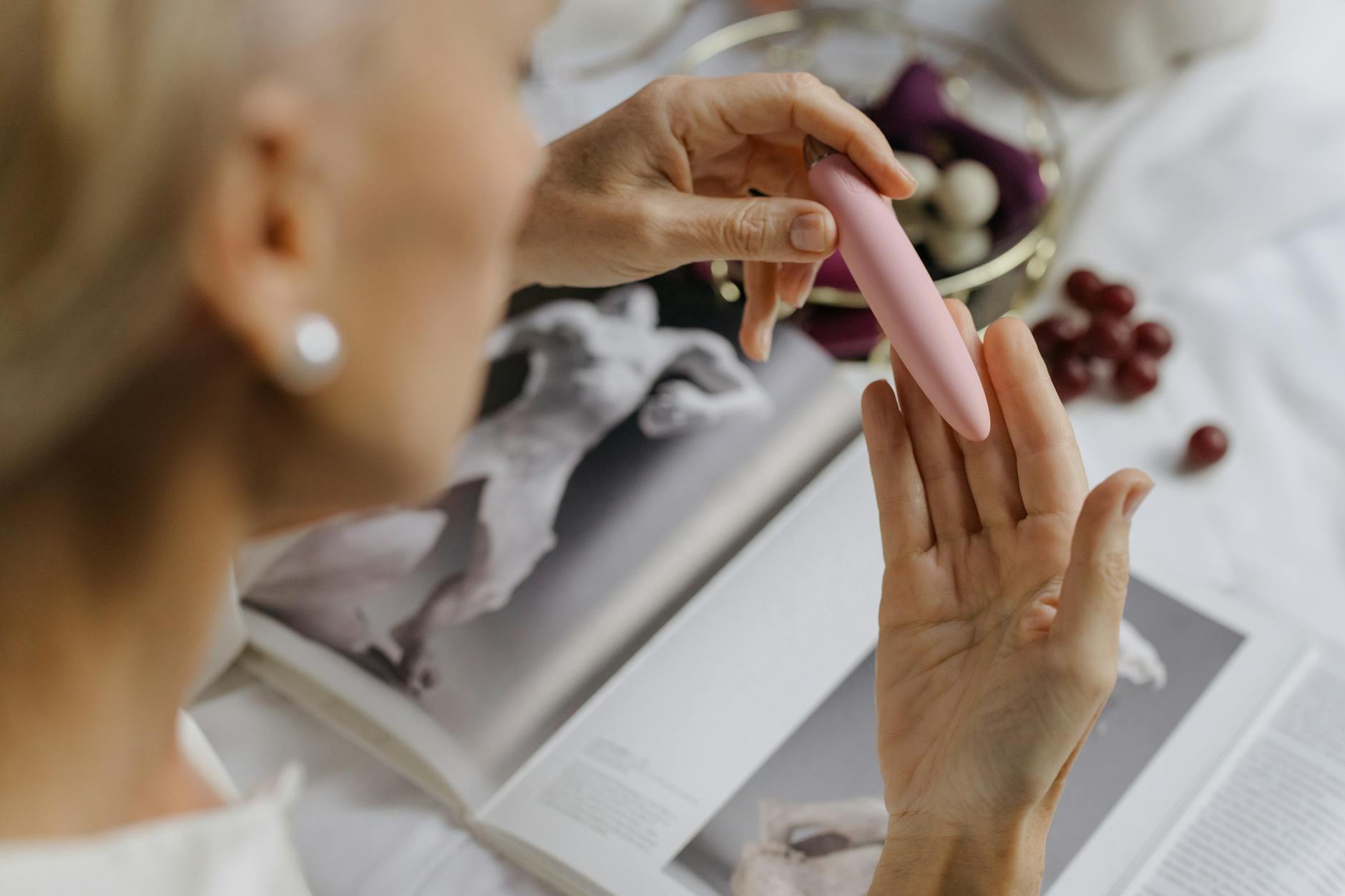
Here's what matters: lemon vibrators, particularly air-suction designs like the Lem, work differently than standard vibration. They create rhythm and sensation that's strong enough to interrupt the anxiety narrative running on repeat in your head.
When sensation is intense enough, it hijacks your attention away from the performance thoughts. You can't simultaneously think "Am I doing this right?" and feel deep suction. Your brain has to choose. Usually, sensation wins. That 2-3 minute window where you're just experiencing physical input, not analyzing it, is enough to downshift your nervous system.
That's the gap where arousal can actually start.
Building a solo practice that rewires the pattern
If performance anxiety has been running the show during partnered sex, your nervous system has learned that sex equals threat. You need to teach it something different. Solo play is the classroom for this.
Start alone, no pressure, no timeline. Spend a few sessions just exploring what feels good without any goal. Not "can I orgasm" but literally "what sensation makes me want to keep going?"
Here's the sequence that works:
- Start with zero expectations. You're experimenting, not performing. This is crucial.
- Use a lemon clitoral vibrator on the lowest setting. You're not trying to climax. You're mapping pleasure.
- Pay attention to what pulls your focus. If you drift into anxiety thoughts, that's fine. Notice it, come back to sensation. No judgment.
- Stop whenever you want. The goal isn't orgasm. The goal is rewiring the "sex equals judgment" pattern into "sex equals actual feeling."
- Do this 3-4 times before you add a partner back in.
This isn't about using the lemon vibrator to get off faster. It's about using it as a nervous system reset tool.
Shifting the conversation with a partner
Here's where most people mess up: they use the vibrator, feel less anxious, and then try to go back to partnered sex the same way. The anxiety returns because the underlying dynamic hasn't changed.
You need to have the conversation separately from the bedroom. Tell your partner: "I've been in my head during sex, and it's killing my arousal. I need us to slow down and check in more often. Not to perform. Just to reconnect."
That's different than "I'm broken" or "This isn't working." You're naming the real problem and asking for a real solution.
Then, when you bring the lemon vibrator into partnered time, position it as something you both explore together. Not a replacement. A tool that helps you get out of your head so you can actually be present.

Photo by Madison Inouye on Pexels
What actually helps mid-session when anxiety creeps in
You're with your partner, things are going okay, and suddenly the anxiety voice comes back. Here's what to do:
Pause and ground yourself. Not the whole thing. Just 30 seconds. Feel your feet on the bed. Notice three things you can see. This pulls you out of the anxiety spiral and back into your body.
Ask for a reset. "I got in my head. Can we just hold each other for a minute?" A partner who cares will actually be relieved. They probably felt the shift too.
Bring in the lemon vibrator. The switch to sensation, to something you've practiced with alone, can reset the nervous system. You're not starting over. You're redirecting.
Lower the expectation on the spot. "Let's just see what feels good right now." Release the goal. You're not trying to orgasm. You're trying to feel safe enough to stay present.
Most of the time, when you stop pushing for a specific outcome, the outcome happens naturally. Because your body can finally relax.
The longer timeline you actually need
Here's what doesn't work: thinking one session with a vibrator will untangle anxiety that's built up over years. It won't. But here's what does work: consistent, low-pressure practice over 4-6 weeks.
Week 1-2: Solo exploration with a lemon clitoral vibrator. Just sensation. Nothing else.
Week 3-4: Solo play continues, and you add one low-pressure partnered session. Something short. No performance expectations. You're building evidence that sex doesn't have to be high-stakes.
Week 5-6: Bring the vibrator into partnered play intentionally. Talk about it first. Make it part of the experience, not a workaround.
By week 6-8, most people notice something real has shifted. Not because the vibrator fixed them, but because they've practiced being present instead of performing over and over. The nervous system learns. Slowly.
When this is bigger than anxiety
If you've been doing the solo practice, communicating with your partner, and arousal still isn't accessible, there might be something else going on. Sometimes performance anxiety is actually trauma response, or depression masquerading as laziness, or a medication side effect you haven't considered.
That's when you talk to someone. A therapist, a doctor, or a sex coach. Not because you're broken, but because you deserve to know what's actually running the show. A lemon vibrator is brilliant for what it does. It's not a substitute for real diagnosis.
The permission you probably need to hear
Performance anxiety thrives on shame. You think there's something wrong with you because you can't just relax and enjoy sex like everyone else apparently does. Everyone else is probably also in their head. They're just not talking about it.
Your arousal matters. Not because your partner deserves it, but because you deserve to feel good in your own body. And that only happens when you stop treating sex like a test you can fail. A lemon clitoral vibrator can help you practice that permission. But the permission has to come from you first.
Start there. The rest usually follows.
People also ask
Can lemon vibrators actually reduce sexual performance anxiety?
Not by themselves, but they can interrupt the anxiety loop. When sensation is strong enough, it pulls your attention away from anxious thoughts and back into your body. That gap is where your nervous system can downshift from fight-or-flight to rest-and-digest. That's the only state where arousal can actually happen. So yes, lemon clitoral vibrators help, but paired with solo practice and honest communication with your partner.
How long does it take to rewire performance anxiety with a vibrator?
Most people notice a shift in 4-6 weeks of consistent solo practice, then another 4-8 weeks of partnered integration. The timeline depends on how long the anxiety has been running. Nervous system patterns don't flip overnight, but they do shift with repetition. Think of it like learning an instrument. It takes time, but it works.
Should I tell my partner I'm using a lemon vibrator because of anxiety?
Yes, but frame it right. Not "I have a problem," but "I'm working on being more present with you, and this is helping me get out of my head." Most partners will actually appreciate the honesty and the effort. If they don't, that's a different conversation.
What if performance anxiety comes back during partnered sex even after solo practice?
It probably will sometimes, especially if you're tired, stressed, or if your relationship hits a rough patch. The lemon vibrator isn't a permanent fix. It's a tool you've learned to use. When anxiety creeps back in, you know what to do: pause, ground yourself, reset. Each time you do it, it gets easier.
Can using a lemon vibrator make performance anxiety worse?
Only if you use it to chase another outcome you're anxious about. If you're thinking "I have to orgasm with this," you've just moved the pressure to a new target. The whole point is to practice pleasure without goals. If you notice the anxiety shifting to the vibrator itself, take a break and come back to it with zero expectations.
How do I know if my anxiety is something I should see a therapist about?
If it's affecting your quality of life, your relationships, or your sense of safety, yes. Especially if you've been in your head for years or if the anxiety started after a specific event. A therapist can help you understand what's really driving it. A vibrator is a great tool for rewiring the nervous system, but it works best alongside real support.
Start with what you can control
You can't instantly rewire 5 years of performance anxiety. You can't force your body to relax on command. But you can practice being present. You can use a lemon vibrator to learn what pleasure feels like without judgment. You can have an honest conversation with your partner. You can give your nervous system time to learn that sex doesn't have to be a test.
That's the actual path forward. Not faster. Truer.