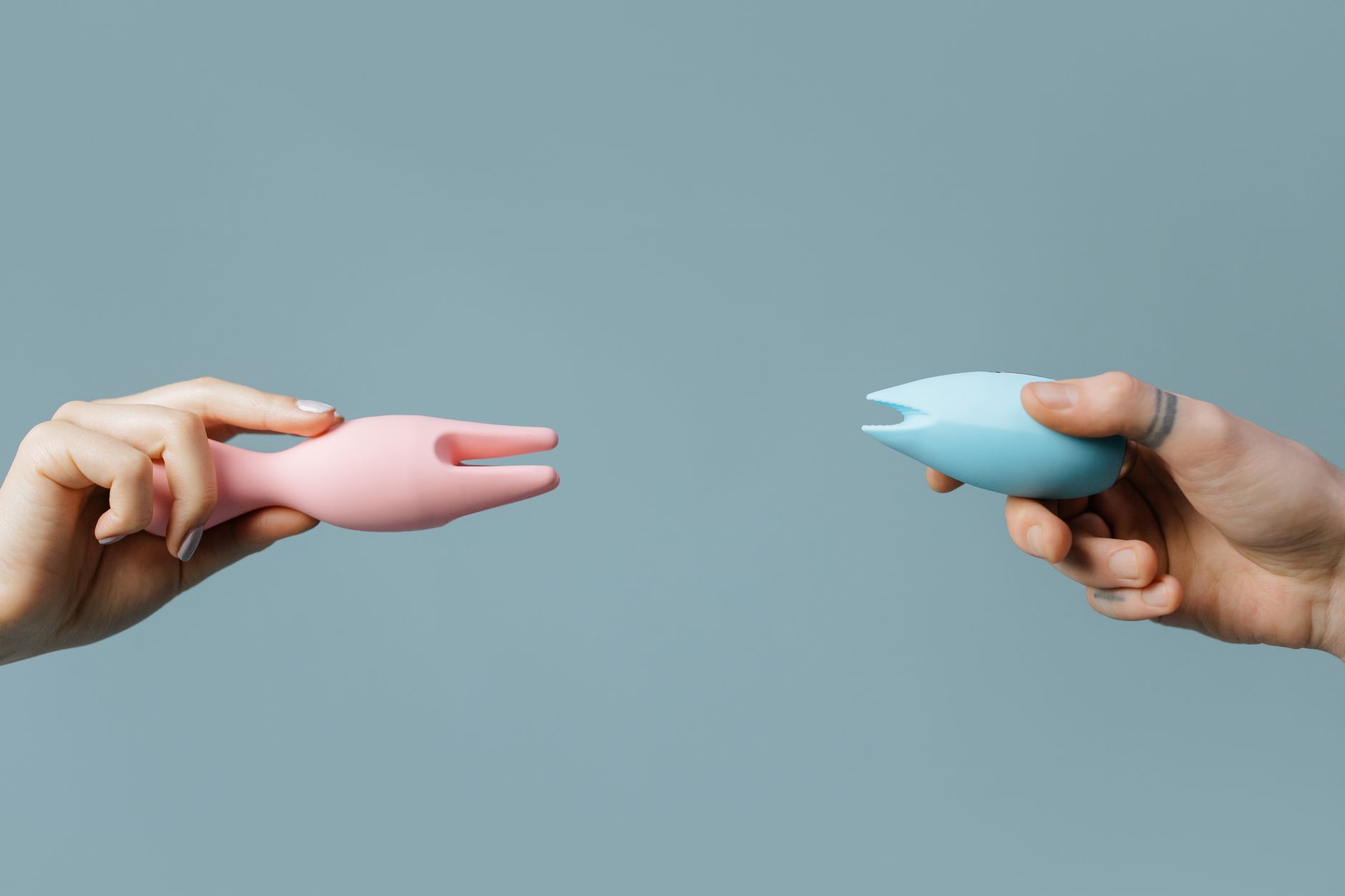
Let's talk about the part nobody mentions
Recovery isn't linear. Your body comes back. Your energy returns. But pleasure? That often gets sidelined as a luxury you'll deal with later. Except later keeps getting pushed back, and suddenly you're wondering if that part of yourself is still there at all. It is. Getting back to it just takes intention and the right tools.
Here's what I tell clients rebuilding after illness, surgery, or medical treatment: your body didn't forget how to feel good. It's in protection mode. That's actually adaptive. Reawakening sensation during recovery is about negotiating with that protectiveness, not forcing through it.
Why pleasure feels different after recovery
Illness and treatment create a kind of sensory reset. Surgery, chemotherapy, hormone therapy, long-term antibiotics, or even severe infection can dampen nerve sensitivity, change hormone levels, or create a psychological association between touch and pain or discomfort. Your nervous system learned to brace. Pleasure requires the opposite.
There's also a timing issue most people don't talk about. The moment you're medically cleared for sex is not the same moment your body is psychologically ready. A doctor's green light feels like permission, but your nervous system may still be in recovery mode. That gap between medical clearance and emotional readiness is real and completely normal.
Lemon vibrators work particularly well during this phase because they separate the experience from partnered intimacy. You can explore at your own pace, control intensity minute by minute, and build confidence without performance pressure. You're not trying to be ready for someone else. You're becoming ready for yourself.
Starting again when touch feels uncertain
The first few weeks of rebuilding are about permission and patience in equal measure.
Begin with solo exploration. Not because partnered sex is off the table, but because solo play removes the variable of another person's timeline or expectations. When you're rebuilding sensation, you need to be the only audience.
Start with the lowest setting on your lemon clitoral vibrator. Pattern 1. Not because you've lost intensity forever, but because your nervous system is still learning that touch equals pleasure again, not discomfort. Spend 15-20 minutes just letting the sensation exist. You're teaching your body that this is safe.
Many people expect pleasure to feel exactly as it did before. It might not. After illness or surgery, sensation can feel shallower, or paradoxically more intense in unexpected spots. Your job isn't to recreate the past. It's to discover what feels good now.
Building back arousal capacity
Arousal is not a switch. It's a slow dial that turns in one direction. When you've been in protection mode, that dial moves slowly.
Don't rush toward orgasm. Genuinely don't. The goal for the first few weeks is sensation and comfort, not climax. A surprising number of people find that removing orgasm as the target actually makes everything feel better. There's less pressure. Pleasure becomes the point, not the proof.
Use your lemon vibrator as a tool for rewaking. Start on your thighs or lower abdomen, not directly on the clitoris. Let your body remember that sensation is good. Then, when you're ready, bring the vibrator closer. Move slowly between settings as arousal builds. You're not chasing an outcome. You're noticing what your body wants in real time.
If you hit a wall where pleasure flatlines, stop. That's your body saying it needs more time. This isn't failure. This is information.
Working with a partner through recovery
If you're rebuilding with someone, one conversation matters more than any technique.
Separate two things in your mind: "I'm rebuilding my own pleasure" and "We're rebuilding our intimate connection." They're related but not identical. Your partner can hold space for the first without it being contingent on the second being perfect immediately.
Some couples find that one partner using a lemon sexual toy while the other partner is present (but not involved) works as a bridge. You're not performing. They're not waiting. You're both learning what your body needs now. That's intimacy too.
If your partner wants to be involved sooner, it's okay to say "I need to figure out what feels good first." That's not rejection. That's necessary self-knowledge. Most partners respect that when you explain it clearly.
Managing pain or discomfort during rebuilding
Some recovering bodies experience tenderness, residual pain, or hypersensitivity in the vulva or pelvic region. If that's you, lemon vibrators can help, but with specific adjustments.
Use the lightest possible setting first. The suction mechanism on lemon clitoral vibrators creates sensation without direct friction, which means less pressure on tender tissue. You can also experiment with placement. The outer labia, upper thighs, or mons pubis might feel better than direct clitoral contact early on.
If pain appears during exploration, pause. Ice is your friend. A low-intensity anti-inflammatory like ibuprofen, taken before a session, can help some people. But if pain persists beyond a few weeks of careful exploration, talk to your doctor. Pelvic floor physical therapy or a pelvic health specialist can rule out complications and give you specific green lights for different types of touch.
The confidence piece that changes everything
Let's be honest. After illness or surgery, your relationship with your body shifts. Sometimes you feel grateful it's still there. Sometimes you feel betrayed by it. Often both, at once.
Pleasure is one of the fastest ways to rebuild that relationship. Not because sex fixes everything, but because it's a concrete way of saying "my body is mine again" and "I trust it to feel good." Using a lemon vibrator is you choosing yourself. Choosing sensation. Choosing to be more than just recovering. That matters psychologically as much as physically.
When to push gently forward
After 2-3 weeks of consistent solo exploration, most people find their arousal capacity starting to expand. You might notice your body responds faster. Orgasms might feel more possible. Or you might notice you simply feel more comfortable with sensation, even if orgasm is still distant.
That's when you can begin to experiment with your partner, if that's relevant for you. Start with the same low-intensity approach. Bring your lemon clitoral vibrator into partnered sex as a tool, not a replacement. Some couples find that integration reduces performance pressure on both sides. You're both oriented toward your pleasure, not toward proving something.
If you're solo, this is when you might explore longer sessions, different settings, or even branching out to other toys. You're no longer rebuilding. You're expanding. That's different energy entirely.
FAQ: Rebuilding pleasure during recovery
How long does it take for pleasure to feel normal again after surgery or illness?
There's no fixed timeline. Some people feel their baseline return within 4-6 weeks. Others need months. Factors like the severity of the condition, type of treatment, overall health, and psychological readiness all affect the pace. The goal isn't "normal." It's "good enough for you right now." That shifts weekly.
Can I use a lemon vibrator immediately after medical clearance for sexual activity?
Medical clearance and readiness are different things. If your doctor says you're physically healed, you're medically cleared. But emotionally and psychologically, you might not be ready yet. That gap is fine. Use the first 1-2 weeks after clearance to explore on your own at your own pace. There's no prize for being fast.
What if I feel numb during stimulation after recovery?
Numbness is common after illness or certain medical treatments. Your nervous system is recalibrating. A lemon vibrator's suction mechanism can help because it engages nerves differently than direct vibration alone. Start on the lowest setting and spend longer sessions (20-30 minutes) allowing sensation to gradually awaken. If numbness persists beyond 4-6 weeks, talk to your healthcare provider.
Should I tell my partner I'm using a lemon vibrator during recovery?
That depends entirely on your relationship and your comfort. If you're rebuilding with a partner and want to integrate the toy into partnered sex later, transparency helps. If you're using it solo as a way to rebuild confidence before partnering again, you don't owe anyone an explanation. The key is honesty with yourself about what you need.
What if orgasm feels impossible during recovery?
Orgasm is not the goal in early recovery. Seriously. If you chase it, you'll reinforce the idea that pleasure has a finish line you have to cross. Instead, redefine success as "I felt sensation," "I felt aroused," or "I felt comfortable in my body." Orgasm often returns naturally once the pressure to achieve it is gone. Give it weeks, not days.
Can I use my lemon sexual toy if I had pelvic floor issues before recovery?
Yes, but with care. The suction-based stimulation of lemon clitoral vibrators is often gentler on the pelvic floor than traditional vibration. That said, if you had pelvic floor dysfunction before, talk to a pelvic physical therapist about what types of stimulation are safe during recovery. They can give you specific guidance that accounts for your history.
You're not starting from zero
Rebuild at whatever pace your body needs. Some days that's 20 minutes of solo exploration. Some weeks it's partnered touch without penetration. Some months it's building back to the fullness of what you had before. That progression is healing. You're not rushing toward normal. You're discovering what feels right now, in this body, at this moment. That's how pleasure rebuilds. That's how trust in your body returns. And that's where the real work begins.
When you're ready to explore with a partner or need guidance on what tools might help your specific recovery, reach out. Your pleasure matters, and how you get there matters too.