
Let's name the thing everyone feels but nobody says
One of you finishes. The other is nowhere close. Now there's this pocket of time that feels weirdly... awkward. Do you keep going? Stop and cuddle? Pretend it doesn't matter? Most couples don't have a plan, which means you're improvising in the moment. That's a recipe for resentment, not pleasure.
Here's the reality: orgasm timing mismatches are normal, incredibly common, and completely solvable. The problem isn't your bodies. It's that most couples treat this moment like a failure instead of an opportunity.
Why this happens (and why it's not your fault)
People with vulvas typically take longer to reach orgasm than people with penises. That's not a judgment. That's physiology. Arousal ramps differently, the refractory period works differently, and the path to orgasm is often longer and more variable. Add stress, hormones, medications, or just being tired, and the gap widens.
What complicates it emotionally is the story you tell yourself: "They finished too fast" or "I take too long" or "They must be bored." None of those are usually true. But you believe them anyway, because nobody teaches couples how to talk about this.
The fix isn't performance coaching. It's having a tool that lets you both enjoy the moment without pressure. That's where a clitoral vibrator like the Lem actually changes the game.
The shift that matters: from sequential to simultaneous pleasure
Most couples think of sex as a shared arc. You both build together, you both finish around the same time. That's one way to do it. But it's not the only way, and it's not even the most satisfying for everyone.
When your partner finishes first, you have two choices. One: stop and cuddle. Two: transition to something that works for your body right now. A lemon vibrator gives you option two without making it feel like a consolation prize.
The mental shift is small but crucial. Instead of "You left me hanging," it becomes "Now I get solo attention." That's not resentment. That's strategy.
How to actually use this without awkwardness
Before it happens. Have the conversation outside the bedroom. "Hey, when one of us finishes first, I'd love to keep going with a vibrator. Would you want to keep touching me, or would you rather rest?" That's it. You're not scheduling anything. You're just removing the surprise.
In the moment. After your partner climaxes, they can reach for the vibrator (if it's within arm's reach, which it should be). Hand it to you. Turn it on. This is not foreplay. This is the main event, round two. Your partner can stay engaged by kissing you, touching you, or simply being present and appreciating your pleasure. That's still intimacy.
For the person who finished first. You get to rest. Your nervous system gets to gradually come back. You're still in the moment, still connected, but you're not performing anymore. Watch, touch, be present. Some partners find this incredibly hot. Others are just relieved to relax. Both are fine.
Practically speaking. Position matters. If you're face-to-face, a lemon clitoral vibrator is ergonomic because it's compact and reaches easily. If you want deeper stimulation, you might transition to a different toy. The point is: you're not stuck with what worked for foreplay.
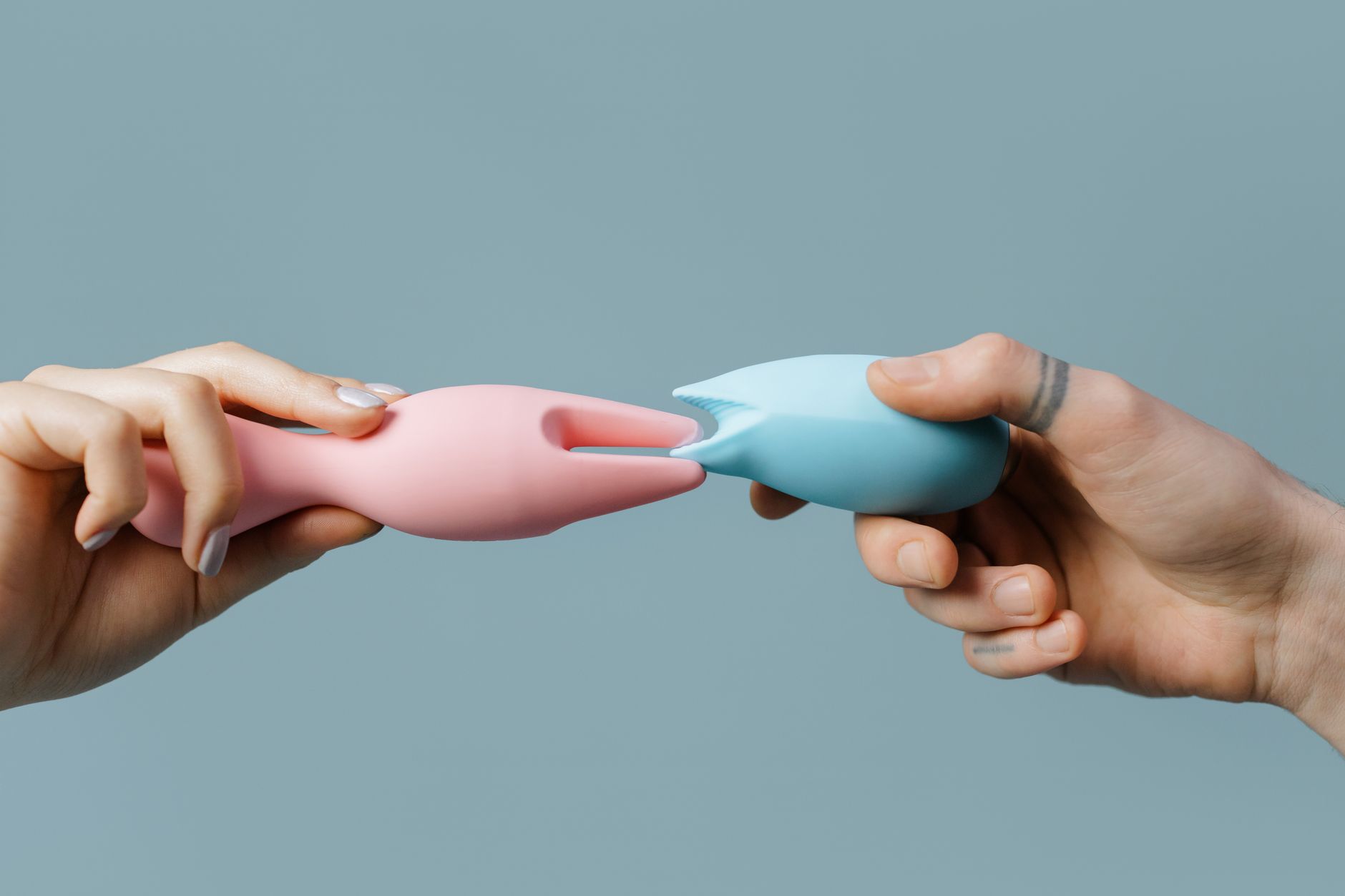
Photo by cottonbro studio on Pexels
Why lemon vibrators specifically solve this
Speed matters. You need something that turns on instantly, doesn't require negotiation, and works reliably. Most toy recommendations come loaded with "communication first," which is fine but doesn't solve the practical problem of right now.
Lemon sexual toys—especially the clitoral sucker style—have a few advantages here. They're quiet enough that you don't kill the mood. They're powerful enough to get you there without a marathon session. And they're intuitive enough that you don't need instructions mid-sex.
The suction mechanism is particularly useful for mismatched timing. It works differently than vibration alone, which means if your body has already been stimulated one way, it responds to something fresh and novel. That newness can be exactly what moves you from "close" to "finished."
The emotional architecture underneath
When you solve the timing problem, you solve something bigger: the story you've been telling about your bodies being incompatible. Because here's what actually happens when you use a vibrator after your partner finishes. They get to feel desired (watching your pleasure). You get to feel prioritized (the focus is on you). Neither of you is waiting for the other or anxious about performance.
That's not a workaround. That's actually better sex.
It also normalizes toys in your relationship in a way that doesn't feel like one person is broken. You're both just using your bodies and tools to maximize pleasure. That's rational, not sad.
When this setup doesn't work (and what to do instead)
If finishing first leaves your partner completely depleted, groggy, or frustrated, there's a different conversation happening. Some people's bodies need fifteen minutes to recover before round two. Some need the entire next day. That's information you need.
If you're the one who finishes first and resent your partner for taking longer, a vibrator won't fix that. That's a story about your own body or desirability. Those are real things worth addressing separately, possibly with a therapist. A vibrator is a tool, not a therapy.
If you're both awkward about toys in general, start smaller. Have your partner hold a vibrator on you while you're inside them, or while they're watching. That's less about the tool and more about building comfort with it together.
The practical setup (make it easy)
Keep the vibrator accessible. Not hidden. If it's in a drawer across the room, you'll never use it. Nightstand, pillow case, under the bed within reach. Same as condoms. This is normal equipment.
Test it beforehand. No surprises mid-sex. You know how it feels, you know the settings, you know you like it. When the moment comes, you're not learning as you go.
If you're new to lemon clitoral vibrators, start on a lower setting and work up. You've already had arousal building, so your sensitivity is different than solo play.
Reframing the whole thing
Mismatched orgasm timing isn't a problem to fix. It's information about two different bodies having fun in one bed. The solution isn't performance coaching or resentment. It's just using what works. A lemon vibrator, hands, angles, speed, dirty talk, or any combination.
When you stop treating one person finishing first as awkward and start treating it as "oh, cool, now we get to do this part," everything shifts. You're not competing. You're tag-teaming pleasure.
People also ask
How do I bring up using a vibrator with my partner without it seeming like rejection?
Frame it as addition, not substitution. "I want you to stay with me, and I think this would feel amazing." Most partners are genuinely relieved to have a solution to this awkward moment. You're not saying "You're not enough." You're saying "I want both of us to finish satisfied." Say it outside the bedroom, calmly, without performance pressure.
Is it okay if my partner doesn't want to participate, just watch or rest?
Completely fine. Not everyone wants to stay actively engaged after orgasm. Some people need to decompress. A vibrator lets them rest while you finish. That's a win. Presence matters more than participation. If your partner is emotionally present, that's enough.
How long does it usually take to finish with a vibrator after my partner does?
It depends on your body, your arousal level, and what you've been doing so far. Could be two minutes. Could be fifteen. Don't aim for speed. The point is you're not rushed anymore. Some people find that the pressure lifts and they actually orgasm faster. Others take longer because they're enjoying it more. Both are correct.
What if we use a vibrator and I still can't come?
Then you have information. Maybe you need a different type of stimulation, or more foreplay, or less performance pressure. Or maybe you're not going to come this time and that's okay. A vibrator solves the timing problem, not all pleasure problems. If you're consistently not reaching orgasm, that's a separate conversation worth having with a partner or therapist.
Can we use a vibrator together even if we usually don't have timing issues?
Absolutely. Toys aren't emergency equipment. They're just tools that feel good. If you both like it, use it. The timing mismatch is a common entry point, but plenty of couples use vibrators as part of their regular rotation because it feels good, not because anything is broken.
How do I know which lemon vibrator is best for this situation?
Look for something compact and versatile. A clitoral vibrator like the Lem is designed for external stimulation, quick activation, and minimal fuss. If you prefer something smaller or want multiple settings, there are options. The key is finding something you enjoy that doesn't require negotiation or setup mid-sex.
Mismatched orgasm timing is one of those things that feels lonely and shameful until you realize it's completely normal. The moment you have a plan and a tool, it stops being awkward and becomes just another part of how you and your partner make love. That shift from "something's wrong" to "here's how we handle this" changes everything.