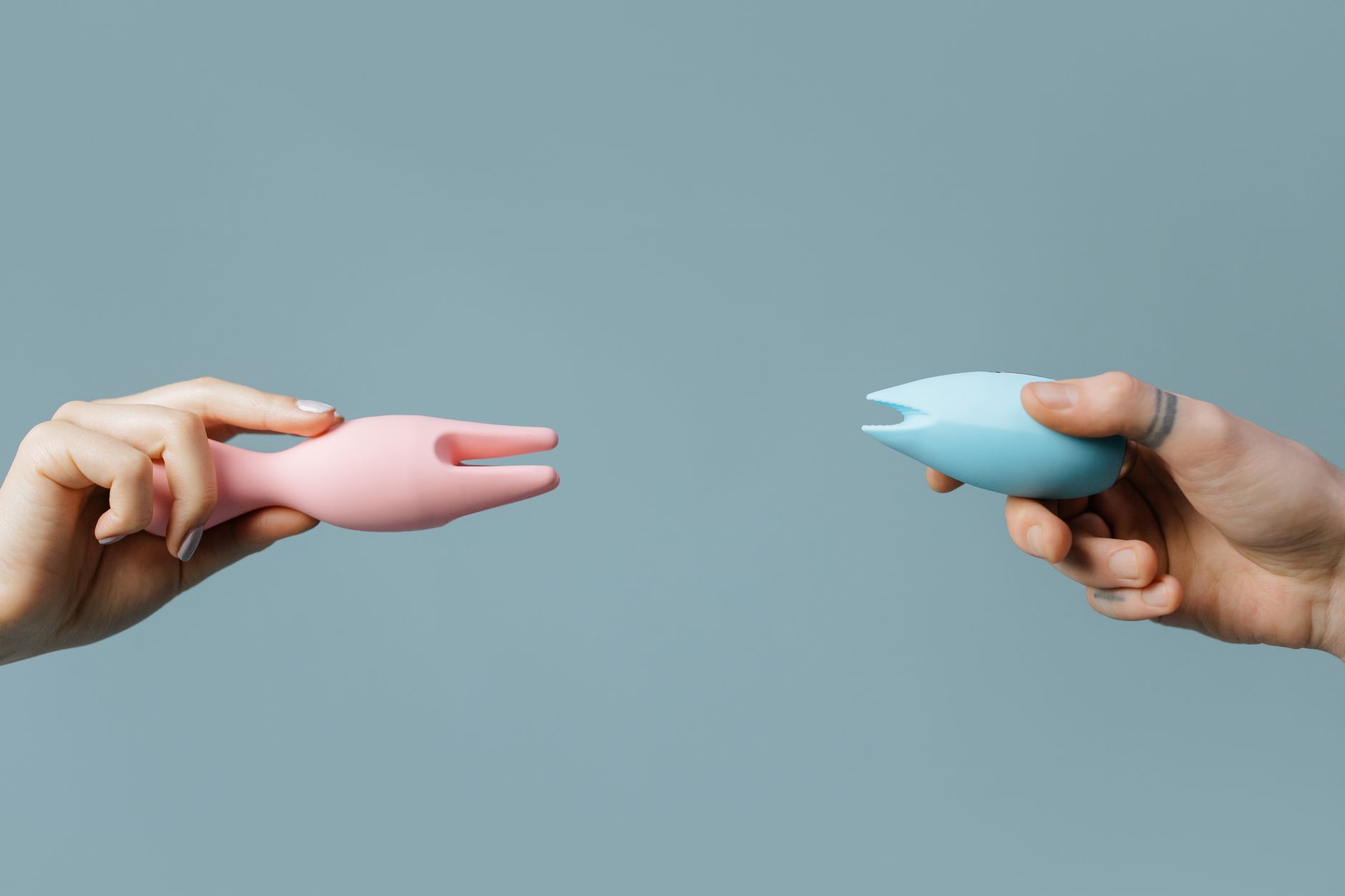
Let's be real about new partner energy
Introducing a lemon vibrator or any clitoral vibrator to someone you're newly intimate with sits in a weird psychological space. You want them to know you're sexual and resourceful. You also don't want them to think you need "help" or that your body is somehow unfinished. The stakes feel higher than they actually are, which means most people either bring it up way too early (like a third date) or way too late (year three, suddenly). Both create unnecessary friction.
The truth is simpler: timing matters less than context. A partner who's genuinely interested in your pleasure will welcome the conversation. If they don't, that tells you something important about compatibility, and that's useful information.
Why the discomfort exists (and why it's not about the toy)
Most of the anxiety around introducing lemon vibrators or other clitoral toys comes from cultural baggage, not from the toy itself. Somewhere we learned that asking for what turns you on is basically admitting your partner isn't enough. Spoiler alert: that's nonsense. Using a lemon vibrator is not a referendum on your partner's sexual competence. It's a different sensation, full stop. A hand and a clitoral vibrator do completely different things to the nervous system.
Your partner might feel insecure because they've internalized the same messages you have. They might worry that introducing external tools means the relationship is broken. This is where your framing matters. The conversation isn't "I need this because you're not doing it right." It's "I've learned something about what my body really likes, and I want to share it with you."
How to read your partner's receptiveness before you say anything
Pay attention to how your partner talks about pleasure generally. Do they ask you what feels good? Do they seem curious about your body, or are they more goal-oriented (focused on "finishing")? Have they mentioned using toys themselves, or do they seem neutral about sex tech?
A partner who regularly asks what you want and seems genuinely interested in your feedback is likely to be open. Someone who treats sex as performance or who gets defensive about constructive feedback may resist initially. That doesn't mean they'll never come around, but it tells you how much context and reassurance you'll need to provide.
Also notice: does your partner initiate conversations about desire? Do they bring toys up casually, or do they seem uncomfortable with the topic? You don't need perfect conditions to have this conversation, but reading the room saves you from making it seem bigger than it is.
The timing sweet spot (and why it matters)
The best moment to introduce the idea of lemon vibrators is sometime between four weeks and four months in. Early enough that you're still in the exploration phase where trying new things feels natural. Late enough that you've built trust and they're not wondering if you're someone who uses toys with everyone on the first date.
Bring it up during a nonsexual moment. Not right before sex, not in the middle of it. Ideally somewhere private where you can both relax without performance pressure. "Hey, I've been using this clitoral vibrator lately and it feels amazing. I'd love to try it with you sometime" is infinitely less fraught than springing it out during foreplay.
If your partner seems interested but hesitant, give them space to sit with it. They don't have to say yes immediately. Sometimes people need a few days or weeks to process new ideas about intimacy, and that's normal.
What to actually say (and what not to say)
Here's the frame that works: you're sharing something that works for your body, and you'd like to share the experience with them. Not: "My partner before me didn't know how to do this properly." Not: "I can only finish with this." Not: "You should want to do this for me."
You might say something like: "I've discovered that clitoral vibrators create a really specific sensation that my body loves. The Lem works especially well for me. I'd love if we could try it together and see how it feels with you involved."
That statement does three things. It centers your body's response, not their competence. It normalizes the tool (you already use it, it's not weird). And it positions them as a participant, not a bystander.
If they ask why, be honest. Do the patterns feel different? Does the intensity help you get there faster? Are you just curious about combining sensations? All of those are completely valid reasons.
Managing different comfort levels in the moment
Even if your partner said yes in theory, bodies sometimes rebel in practice. Maybe they didn't expect the sound, or they feel vulnerable watching you use it, or they're worried about their own performance. These things come up.
Start low pressure. The first time, maybe just show them the toy. Let them hold it. Explain how it works without expecting anything sexual to happen. Then the next time, you might use it solo while they're present and watching. Then together. You're building comfort incrementally.
If your partner seems uncomfortable mid-session, pause. This is not a failure. Ask what feels weird. Sometimes it's just unfamiliarity and fifteen seconds of conversation fixes it. Sometimes it's something deeper, and you've just learned something important about what they need.
One common note: partners often worry they should "be doing something" while you're using the lemon vibrator. Tell them explicitly what you want. "I love when you kiss my neck" or "Just stay close" or "Tell me what you're thinking." Uncertainty makes people freeze up.
When comfort levels stay mismatched
Occasionally, you'll find that your partner is fundamentally not comfortable with sex toys, even after conversations and time. They might have religious beliefs, past trauma, or just a genuine incompatibility with the idea. This is information.
You get to decide if this is a dealbreaker. For some people it is. For others, a partner who's willing to respect your solo use even if they don't participate is enough. Neither choice is wrong. But know that this discomfort rarely resolves on its own. Time and reassurance help, but they don't typically change someone's core beliefs about bodies and pleasure.
If you move forward with someone who's uncomfortable with lemon vibrators but you want to use them, establish boundaries that work for both of you. Maybe you use them solo. Maybe you use them but they don't watch. Maybe it's something you're both willing to revisit later.
The plot twist: sometimes they want to try first
Honestly? About a third of the time, when people are introduced to clitoral vibrators thoughtfully, they get curious about their own experience with them. Your new partner might ask to try the Lem themselves. This is totally normal. Bodies with vulvas respond to clitoral stimulation regardless of who's operating the tool.
If that happens, let them explore. You don't need to orchestrate or perform. Just let them figure out what they like. You might learn things about their body in the process. And you've just shifted the conversation from "her weird thing" to "something we both find interesting," which changes the entire dynamic.
Red flags that suggest incompatibility beyond the toy
Listen to how your partner responds to the conversation itself, not just whether they say yes. If they shame you for using toys, act disgusted, or try to convince you that wanting lemon vibrators means something is wrong with you, that's not really about the toy. That's about control and discomfort with your agency.
A partner who loves you might feel temporarily insecure. But that's different from someone who is fundamentally threatened by your pleasure. One of those can be worked through. The other is a sign that you're with someone who needs you to be a certain way, and that's rarely compatible with genuine intimacy long-term.
What happens after you introduce it
If your partner is receptive and curious, the lemon vibrator becomes just another part of your sexual toolkit. It's not always necessary. Some sessions you'll use it, some you won't. It's an option, not an obligation.
Over time, the novelty wears off and it becomes practical. You know which intensity settings you prefer. You know when you want your partner involved and when you want solo time with it. You understand how it fits into your sexual rhythm together.
And if something doesn't work out with this particular partner? You know your own body better. You know what you like. You've learned to advocate for your pleasure. Those things travel with you to the next relationship, where the conversation might be easier, or might surprise you all over again.
People also ask
How soon into dating should you mention lemon vibrators?
Sometime after you've been sexual together a few times, but before you're deeply entangled. Four weeks to four months is the sweet spot. Earlier feels like you're setting a precedent. Much later and it feels secretive. The timing is less important than the tone, though. Confident, matter-of-fact conversation about pleasure will land better than anxious or apologetic framing no matter when you have it.
What if your new partner gets offended that you already own a clitoral vibrator?
That's their insecurity speaking, not a statement about you. You're allowed to have explored your own pleasure before meeting them. Gently point out that you're not asking them to use it because you don't like how they touch you. You're sharing something you enjoy because you want deeper intimacy with them. If they stay defensive after a straightforward conversation, that tells you something about how they handle their own vulnerability.
Can you use the Lem during partnered sex on a first encounter together?
Technically yes, but it's not ideal for building comfort. Save that for after you've both had time to get used to the idea. The first time using a clitoral vibrator together should feel like an experiment, not a performance requirement. Take pressure off. You don't need to come. You don't need to demonstrate anything. You're just exploring what happens when you add this sensation to what's already working.
How do you handle it if they're curious but also nervous?
Nervousness is actually good. It means they're taking it seriously. Let them ask questions. Show them the toy outside the bedroom. Explain what it does and how it feels. Use it solo while they watch if that helps them feel less of a performance pressure. Go slowly. Comfort builds incrementally, not through forcing.
What if you're more experienced with toys than they are?
Don't assume that makes you more sexually advanced. It just means you've had different histories. Some partners come to toys early and comfortably. Others don't explore that territory until much later, or never, and they're still fully sexual beings. Share what you know in a curious way, not a teaching way. "This is something I've found works for me" lands better than "Let me show you how this works."
How do you bring it up without making them feel replaced?
Frame it as addition, not substitution. "I want to explore this with you" not "I need this instead of you." Show vulnerability. "I'm excited about this and a little nervous bringing it up with you" is honest and disarming. And follow through by staying present. Don't hide behind the toy. Keep kissing, talking, moving. The vibrator is an instrument, not a replacement for intimacy.
What matters more than the conversation itself
Here's what I've learned from years of talking with couples about pleasure: the actual object matters less than what it represents. If you're introducing lemon vibrators because you want deeper knowledge of your own body and you want to share that with your partner, they usually feel it. They sense the confidence. They sense the care you've taken to build trust first.
Your new partner will likely follow your lead. If you're shameful or apologetic, they'll wonder if they should be uncomfortable. If you're matter-of-fact and curious, they're more likely to be too. And if they're genuinely not interested in exploring with you, that's also information about compatibility.
The right person will want to know what turns you on. And if this one doesn't, the next one might.