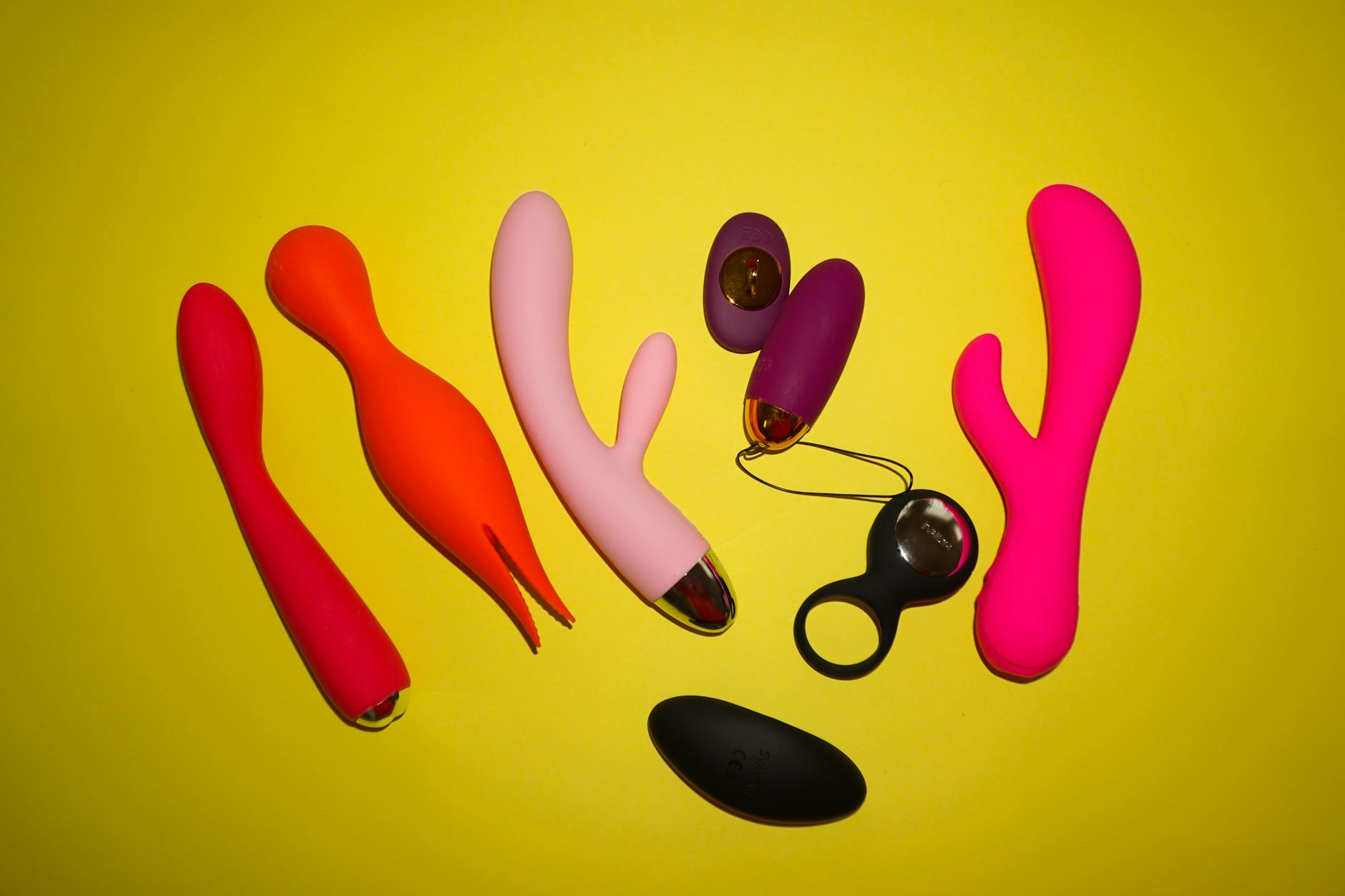
How to Use Lemon Vibrators When Your Partner Has Low Desire
Let's name the thing no one wants to talk about
One of you wants sex more than the other. Maybe a lot more. And that gap has become something you both tiptoe around, which only makes it bigger. You're not broken. Your partner isn't broken. But the silence between you is getting louder.
This is one of the most common relationship complaints I hear in my practice, and it's also one of the most solvable. The solution isn't convincing your partner to want sex more. It's not suppressing your own desire. It's finding a way to hold both truths at once: you deserve pleasure, and your partner deserves freedom from pressure. Lemon vibrators, and clitoral suction toys in general, can actually be a bridge here.
Why mismatched desire isn't about attraction
Let me say this directly: if your partner has low desire and you have high desire, the gap is almost never because they're not attracted to you. It's almost never about love running out either.
Desire is complicated. It's shaped by stress, work, health, medication, relationship patterns, childhood wiring, hormones, and a hundred other things that have nothing to do with how much they value you. Stress tanks libido. Feeling controlled kills it. Resentment smothers it. Depression flattens it. A history of feeling obligated suffocates it.
Here's the clinical pattern I see over and over: the higher-desire partner starts initiating more. The lower-desire partner begins to feel hunted. They withdraw. The higher-desire partner feels rejected and pushes harder. The lower-desire partner shuts down completely. Within six months, they're not touching at all, and both people are miserable and convinced the other one doesn't love them anymore.
Lemon vibrators break this cycle, but only if you use them a specific way.
The permission piece comes first
Before you bring any toy into this equation, your partner needs to know something explicitly: they do not have to participate. Their job is not to fix your desire. Their job is not to match your libido.
This sounds obvious. But in a mismatched-desire relationship, it's revolutionary.
I recommend having this conversation outside the bedroom. Over coffee, on a walk, somewhere calm. Something like: "I've been thinking about what we've talked about with sex. I know you don't want it as often as I do, and I don't want you to feel pressured. I'm thinking about using a lemon vibrator sometimes on my own, and I wanted you to know. This isn't about you failing me. It's about me taking care of myself."
Then stop talking. Let them respond. Don't sell them on it. Don't ask for permission. Just inform them, clearly, that you're reclaiming your own pleasure.
This shift alone often softens the dynamic. When the lower-desire partner realizes they're not responsible for fixing the higher-desire partner's sexual needs, something unexpected happens. Pressure lifts. And sometimes, not always, desire reappears on its own.
How to actually use lemon clitoral vibrators in this situation
Let's talk logistics. There are three ways this typically plays out, and each one requires slightly different boundaries.
Option 1: You use it alone, privacy intact. This is the most straightforward. You use your lemon vibrator in the shower, or when your partner is out, or with headphones on. Your partner doesn't have to witness it. They don't have to participate. They just know it's happening and they're okay with it. This works well for partners who are uncomfortable with sex toys in general but are willing to grant you autonomy. It's not the most intimate solution, but it's honest and it works.
Option 2: You use it while they're in the room. This is the middle ground. You're being intimate in the same space. Maybe they're reading, or scrolling, or just lying next to you. You use your lemon vibrator while they're there, and they can choose to engage or not. This creates a kind of parallel intimacy where you're taking care of your own body while staying connected. Some partners find this genuinely hot once the initial awkwardness wears off. Others find it's enough just knowing you're being pleasured in the same room.
Option 3: They participate, but on their terms. This is where it gets interesting. Your partner might not want to initiate sex, but they might be willing to watch you use a lemon vibrator. They might be willing to touch you while you use it. They might be willing to talk to you while you're using it. The key here is that it's collaborative without requiring them to perform. They're showing up in whatever way feels good for them. Some lower-desire partners actually find this less intimidating than traditional sex because there's no expectation they'll "finish" or reach orgasm themselves.
What changes in the relationship
Here's what I've observed in my practice over decades of working with couples: when the higher-desire partner stops making their sexual fulfillment the lower-desire partner's responsibility, everything gets better. Not just sex. The whole relationship gets better.
The resentment starts to lift. The higher-desire partner stops feeling starved. The lower-desire partner stops feeling hunted. Both people get to exist without shame. And honestly, a lot of couples report that this separation actually leads to more sexual connection eventually, because sex is no longer weaponized as proof of love.
A lemon vibrator is a specific tool in that process. It says: I can take care of myself. I don't need you to fix me. But I still want you here.
The conversation after you start
Once you've introduced this into your dynamic, check in with your partner. Not every time, but periodically. "How are you feeling about this? Do you want to know more, or is this working as is? Should we try something different?"
This isn't about convincing them to do anything. It's about making sure you're both comfortable. Some partners might surprise you and ask questions. Some might ask if they can use a toy too. Some might realize that this actually opens up conversations about what they do want sexually, which has nothing to do with how often.
The lowest-desire partner might discover they actually enjoy intimacy more when it's not about orgasm or penetration. They might enjoy touch, or closeness, or using a clitoral vibrator together. These discoveries only happen when pressure is off the table.
When to get help
If you've had this conversation clearly and your partner refuses to let you have autonomy over your own pleasure, that's a bigger relationship issue than sex. That's about control. A good couples therapist can help you navigate whether this is a solvable dynamic or whether it's a sign the relationship isn't built on mutual respect.
Likewise, if your desire gap is so wide that you're genuinely considering ending the relationship, a therapist trained in sexual issues can help you figure out if this is incompatibility or if it's a pattern that can shift.
But in most cases? This is just a normal relationship problem that has a normal solution. You take care of your own body. Your partner takes care of theirs. You stay connected without making sex the proof of your relationship.
FAQs: Real questions about lemon vibrators and low-desire partners
Is using a vibrator when my partner has low desire insulting to them?
Not if you frame it correctly. You're not using it because they're failing you. You're using it because you deserve pleasure, and you're not making it their job to provide it. Most low-desire partners actually feel relieved. It takes the pressure off.
What if my partner says they feel replaced by the vibrator?
That's a conversation worth having. Sometimes people say this when they really mean "I'm afraid you don't want me anymore." You can reassure them while still keeping your boundary. "I love you and I'm attracted to you. I also deserve to have my own pleasure. These things are both true."
Can we use lemon vibrators together if my partner has low desire?
Absolutely. In fact, some couples find that lemon clitoral vibrators are less threatening than traditional penetrative sex for lower-desire partners. There's no "performance" required. Everyone can just enjoy it.
Should I hide that I'm using a vibrator?
No. Hiding it makes it shameful, and shame makes the relationship dynamic worse. Be honest. Be clear. Be unapologetic about your own needs.
How do I know if the vibrator is helping or making things worse?
Pay attention to the overall temperature of your relationship. Is resentment decreasing? Are you fighting less about sex? Is your partner seeming more relaxed? Those are good signs. If your partner is getting more withdrawn or angry, that's a sign you need to recalibrate the conversation, not the tool.
What if my partner wants to use a lemon vibrator too?
Then you've cracked something open that matters. Go slowly, ask what they want, and let them lead. Sometimes lower-desire partners discover they actually enjoy clitoral vibrators more than penetrative sex. Give them space to figure that out without pressure.
The longer view
Mismatched desire is one of the most common things couples navigate, and it's also one of the most fixable. Lemon vibrators aren't the solution to a broken relationship, but they can be a tool in rebuilding one where both people get to have their pleasure matter.
Your desire is not wrong. Your partner's low desire is not wrong. You can both be true at the same time. And sometimes, when you stop trying to force alignment and instead build space for both of you to exist as you are, the alignment happens on its own.
If you're still struggling with how to navigate this in your specific relationship, consider reaching out to a couples therapist or having a deeper conversation with your partner. What works for one couple might look totally different for another, and that's okay. The important thing is that you're both heard, both respected, and both getting to be fully human in the relationship.